
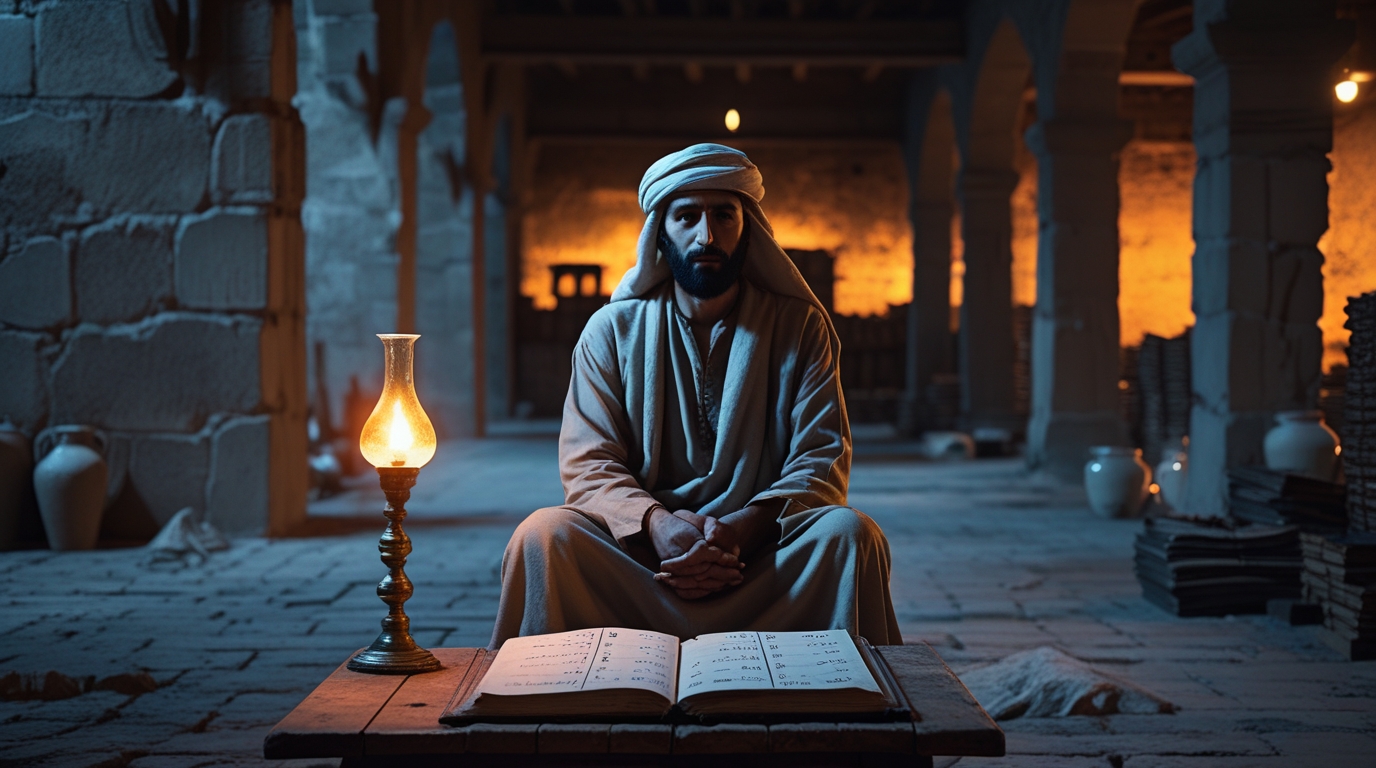
The Parable of the Two Farmers
"Two farmers worked neighboring fields. Both wanted to expand their farms. The first farmer borrowed silver from a moneylender to buy additional land immediately. He worked the expanded farm, produced larger harvests, and felt wealthy. The second farmer saved for years, buying land only when he could afford it outright.
Then came the year of drought.
The first farmer's harvest failed. He couldn't repay his debt. The moneylender took everything—the new land and the original land both. The farmer who had seemed wealthy became landless in a single season.
The second farmer's harvest also failed. He had no debt to repay. His land remained his. The next year, when rains returned, he farmed again. Twenty years later, his modest farm still produced while the first farmer was still working other men's land to survive."
The First Truth: Debt Doesn't Buy Assets, It Rents Them
Jabir believed his warehouse expansion made him wealthier. Khalil showed him the contracts. "You don't own this warehouse. The moneylender does. You're renting it with your future earnings. If those earnings don't materialize, you lose not just what you borrowed to buy, but everything you already owned."
Nasir owned less in total value, but every stone of his small warehouse belonged to him completely. No moneylender could take it. No bad season could forfeit it. His smaller holdings were actually his. Jabir's larger holdings were contingent on future performance that no one could guarantee.
Ownership that depends on future payments isn't ownership—it's conditional access. Real wealth is what remains yours when everything goes wrong. If you can't survive a bad year without losing everything, you own nothing. You're just holding assets temporarily until circumstance takes them back.
The Second Truth: Debt Transfers Risk Without Transferring Reward
The moneylender who financed Jabir's expansion took no risk. If the business succeeded, Jabir repaid with interest and the lender profited. If the business failed, the lender seized Jabir's assets and still profited. The lender couldn't lose.
Jabir took all the risk—risk of market changes, theft, disaster, competition—but the reward was limited by the debt he had to repay. Success meant paying back the lender with interest. Extraordinary success meant paying back the lender with interest. The upside was capped by obligation.
Debt is a mechanism for transferring risk from those who have capital to those who need it, while ensuring the rewards flow upward regardless of outcome. Every debtor believes they're buying opportunity. They're actually selling their upside to purchase downside risk.
The Third Truth: Free Men Make Better Decisions Than Desperate Ones
Khalil watched debtors for two decades. "A man with debt makes decisions to service that debt. A man without debt makes decisions to build wealth. They look the same but they're not."
Jabir couldn't turn down any trade, even marginal ones, because he needed revenue to make payments. He couldn't wait for optimal prices because debt had deadlines. He couldn't refuse bad partners because he needed their business. His debt dictated his decisions, which meant his decisions optimized for survival, not prosperity.
Nasir could wait for the right trade. He could refuse deals that didn't meet his standards. He could negotiate from strength because he had no deadline forcing his hand. His freedom to choose meant he chose better, which compounded into superior outcomes over time.
Desperation is expensive. It costs you negotiating power, optimal timing, and quality partnerships. Debt creates artificial desperation even in good times because it imposes deadlines that force suboptimal choices. The debtor is never free to make the best decision—only the necessary one.
The Fourth Truth: Interest Compounds Against You
Jabir paid twelve percent interest on his borrowed silver. "Only twelve percent," he said, as if the number was small. Khalil showed him the mathematics that destroyed empires.
"You borrowed one hundred pieces of silver. In one year, you owe one hundred twelve. If you can only pay ten pieces this year, next year you owe one hundred fifteen. The year after, one hundred eighteen. The debt grows while you work. You're running uphill while the hill gets steeper."
Nasir's savings worked differently. The silver he didn't borrow, he kept. That silver earned rather than cost. It grew in his favor instead of against him. The same mathematical force that destroyed debtors enriched savers. Time was Jabir's enemy and Nasir's ally, and the only difference was the direction of the interest.
Compound interest is the most powerful force in wealth. It can build fortunes or guarantee poverty. The direction it compounds—for you or against you—determines which side of wealth you occupy. Debt ensures it compounds against you.
The Fifth Truth: Owing Nothing Is Invisible Wealth
"How much is Nasir worth?" Khalil asked the merchants. They guessed based on his visible assets—his small warehouse, his modest inventory.
"Now add what he doesn't owe. Add the freedom to make optimal choices. Add the security of surviving bad years. Add the compounding advantage of keeping all his profits instead of sharing them with lenders. Add the peace that comes from knowing that disaster makes him poorer but not destroyed. That's his real wealth, and none of you can see it."
Debt-free status is invisible on balance sheets but visible in outcomes. The merchant with no debt weathers storms that sink competitors. He seizes opportunities that debtors must pass on. He sleeps soundly while debtors calculate whether they can make next month's payment. These advantages don't appear in accounts, but they create wealth more surely than borrowed silver ever does.
The Sixth Truth: Growth Without Debt Is Sustainable, Growth With Debt Is Fragile
Jabir grew fast. His business expanded dramatically in two years. It looked impressive. It was fragile. Any disruption—political instability, new competition, supply problems—threatened everything because his structure required constant revenue to service constant obligations.
Nasir grew slowly. His expansion was boring to watch. It was antifragile. Each piece he added strengthened his position without adding vulnerability. Setbacks slowed him but didn't break him. His business could survive years of difficulty because it had no mandatory outflows that continued regardless of inflows.
Fast growth impresses observers. Sustainable growth creates wealth. The ancient scrolls celebrate the merchants whose grandchildren still traded, not the merchants who briefly seemed successful before circumstances revealed the fragility of their borrowed position.
The Seventh Truth: The Richest Man Still Has Debts to Pay
"Even the king owes," Khalil said. "He owes his subjects protection. He owes his allies loyalty. He owes the gods their tribute. The only man who is truly wealthy is the man who can walk away from everything tomorrow and still sleep peacefully that night. That man owes nothing to anyone."
Financial debt is obvious. But there's another kind of debt: obligation that owns your time, your choices, your peace. The merchant with no financial debt but a business that demands his constant presence is still in bondage. The noble with silver but a position that requires his continuous performance is still a debtor.
True wealth is the ability to stop without consequence. If you can't walk away, something owns you. It might be debt, duty, reputation, or need—but ownership is ownership. Freedom means owing nothing, financially or otherwise.
The Final Accounting
Five years after their conversation with Khalil, drought came to Damascus. Markets contracted. Trade routes closed. Revenue collapsed for every merchant in the quarter.
Jabir, with his borrowed expansion, couldn't make his payments. The moneylender seized his warehouse, his inventory, everything. Jabir went from wealthy to landless in the span of one bad season. He spent the next decade trying to rebuild what he'd once owned.
Nasir, with his debt-free holdings, simply waited. He maintained his small operation through the difficulty. When prosperity returned, he resumed growing—still slowly, still without debt. His modest business survived where impressive ones failed.
Khalil, who understood debt better than anyone, never borrowed a single piece of silver in his life. He died wealthy, but more importantly, he died free. The scrolls remember him not for how much he owned, but for what he never owed.
The lesson isn't that debt is always wrong. It's that debt transfers freedom from you to your lender, and freedom is the asset that creates all other assets. Whatever debt purchases, it costs you the capacity to make optimal decisions under pressure. And that capacity is worth more than anything debt can buy.
Owing nothing isn't poverty. It's the foundation of actual wealth. Everything else is just expensive borrowed appearances.