
The First Truth: Build What Survives You
Darius built a business that required him. Every transaction needed his approval. Every decision awaited his presence. When he fell ill, revenue stopped. When he died, the shop closed within months. His wealth lived and died with him.
Nabor built systems that continued without him. He trained apprentices who became masters who trained others. He established standards of quality that bore his seal long after his hands stopped working. He created methods that persisted because they were written into stone and practice, not dependent on any single person's memory or presence.
Wealth that requires your constant attention isn't wealth—it's a job. Real wealth works while you sleep, continues after you die, and creates opportunities for people you'll never meet. If removing yourself destroys what you've built, you haven't built anything permanent.
The Second Truth: Invest in What Appreciates
Darius bought inventory that sat on shelves, slowly losing value to dust and obsolescence. His silver was always tied up in things that would eventually be worth less than he paid for them. He could never be far from his shop because his wealth was locked in perishable goods.
Nabor invested in knowledge that compounded. He spent years learning engineering principles that made his structures stronger, more elegant, more enduring than competitors'. He invested in relationships with quarry masters who gave him first choice of the finest stone. He invested in his reputation until his name alone guaranteed quality that commanded premium prices.
The poor invest in things that depreciate. The wealthy invest in assets that appreciate—skills that become more valuable with practice, relationships that create compounding opportunities, knowledge that solves increasingly expensive problems, and systems that become more efficient with scale.
The Third Truth: Create What Others Cannot Replace
Anyone could open a shop like Darius's. His business had no moat, no barrier that prevented competitors from offering the same goods for less. He competed on price and proximity, which meant he competed with everyone and differentiated from no one.
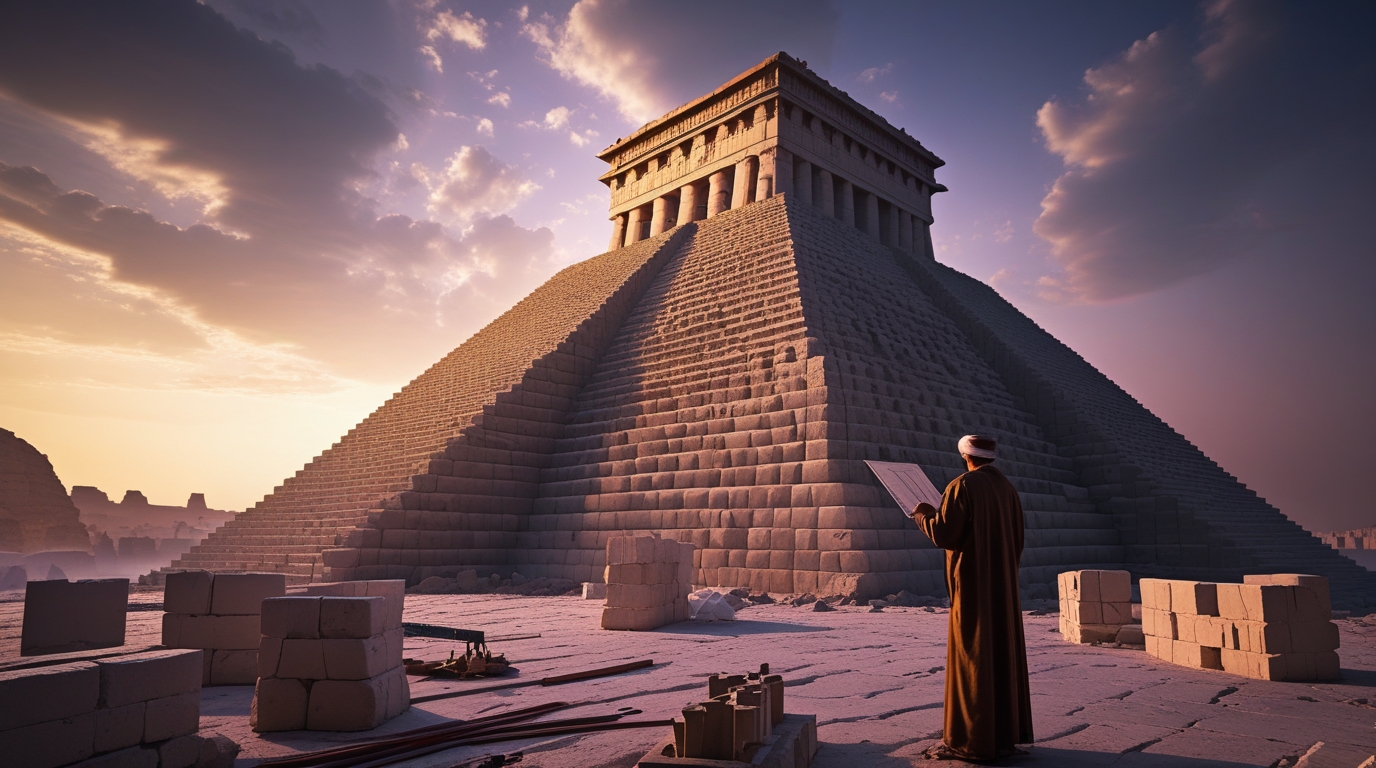
Nabor built temples that defied understanding. His structures incorporated principles of weight distribution and astronomical alignment that other builders couldn't replicate. Kings and priests sought him specifically because no one else could deliver what he delivered. His work wasn't just good—it was singular.
Wealth flows to the irreplaceable. If a dozen others can do what you do, you'll forever be negotiating price. If you can do what no one else can, you set terms. The question isn't whether you work hard. The question is whether you work on developing capabilities so rare that people have no choice but to meet your price.
The Fourth Truth: Think in Generations, Not Transactions
Darius thought about today's sales and tomorrow's profit. His horizon was the next market day, the next season at most. This short-term thinking kept him trapped in immediate needs, always reacting, never building toward anything beyond survival.
Nabor thought in lifetimes. He planned temples that would take decades to complete. He trained apprentices knowing he'd never see their full potential realized. He negotiated contracts that would pay his grandchildren. This long-term vision freed him from the tyranny of immediate profit and allowed him to make investments that would mature after his death.
The wealthy don't just think further ahead—they build for timescales that transcend their own existence. They plant orchards they'll never harvest. They establish systems that will outlive them. They create value that compounds across generations. If your wealth can't survive your death, it isn't real wealth.
The Fifth Truth: Problems Are More Valuable Than Solutions
Darius saw problems as obstacles—difficulties that prevented sales, complications that slowed transactions. He avoided complex situations because they were hard to monetize quickly.
Nabor saw problems as opportunities. When a king needed a temple built on unstable ground, others refused the project. Nabor studied the problem for months, developed a new foundation technique, and charged a fortune for solving what no one else would attempt. Each impossible problem he solved increased his value and expanded what he could command for future work.
The biggest fortunes come from solving the most expensive problems. Stop avoiding difficulty. Start seeking the problems so costly that people will pay almost anything to fix them. Your willingness to engage with complexity that others flee is what makes you valuable.
The Sixth Truth: Teach to Multiply, Hoard to Stagnate
Darius guarded his suppliers and methods like secrets. He feared that sharing knowledge would create competitors. This hoarding made him a bottleneck—his business could only grow as fast as he personally could work.
Nabor taught freely. He documented his methods, trained anyone willing to learn, and shared principles that others used to build their own success. This generosity created a network of skilled builders who referred complex projects to him, who collaborated on massive works he couldn't complete alone, and who elevated the entire field in ways that made his expertise even more valuable.
Hoarding knowledge makes you a singular point of failure. Sharing it creates a network effect where your influence and opportunities multiply beyond what you could ever achieve alone. The wealthy understand that their greatest value isn't what they know—it's what they can teach others to do.
The Seventh Truth: Legacy Is Measured in Elevation, Not Accumulation
When Darius died, his children fought over the silver he'd saved. Within a generation, it was spent. His name faded. Nothing he did changed the world in any way that mattered beyond his immediate household.
When Nabor died, his methods had elevated an entire craft. Young builders studied his temples to learn principles. His innovations became standard practice. Cities stood stronger because of techniques he pioneered. His wealth wasn't just the silver he accumulated—it was the knowledge he embedded in culture, the standards he established, and the capabilities he passed forward.
True wealth isn't measured by what you take from the world, but by what you leave in it. Did you elevate your field? Did you enable others? Did you create something that made the future different than it would have been without you? That's the wealth the ancient scrolls describe—not hoards of gold, but influence that echoes forward through time.
The Final Lesson
The scrolls don't celebrate Darius because there's nothing to celebrate. He lived, he worked, he died, and the world continued unchanged. They celebrate Nabor because he understood that wealth isn't accumulation—it's creation. It's building what persists. It's solving what matters. It's teaching what elevates.
You can spend your life chasing transactions like Darius, ending each day with a little more silver and nothing that outlasts you. Or you can build like Nabor—slowly, deliberately, with your eyes on horizons you'll never reach but that your children's children will inhabit.
The choice isn't about money. It's about whether you're content to be forgotten or committed to being remembered because you changed what was possible.
The temples still stand. The shop is dust. That's not metaphor. That's the lesson.